Weeds can quickly take over a garden, competing with your plants for nutrients, water, and sunlight. While commercial herbicides are effective, they often contain harsh chemicals that can harm the environment, beneficial insects, and even pets. Fortunately, there are plenty of natural remedies that can help you keep weeds at bay without resorting to toxic solutions. Here are some of the best chemical-free ways to control garden weeds, enabling weed management whilst keeping your garden healthy.
Mulching
Mulching is one of the most effective ways to suppress weeds naturally. By covering the soil with organic materials like wood chips, straw, or leaves, you block sunlight, preventing weeds from growing. Mulch also helps retain moisture and enriches the soil as it decomposes.
Boiling Water
A simple yet powerful weed killer, boiling water can be poured directly onto unwanted plants. The extreme heat destroys the weed’s cell structure, causing it to wilt and die. This method is especially useful for weeds growing in cracks in sidewalks or driveways.
Vinegar Solution
Vinegar contains acetic acid, which dehydrates and kills weeds on contact. To create an effective natural weed killer, mix white vinegar with a few drops of dish soap (to help it adhere to leaves) and spray it directly onto weeds. Be cautious—vinegar can kill other plants, so apply it carefully.
Corn Gluten Meal
Corn gluten meal is a natural pre-emergent herbicide that prevents weed seeds from germinating. Sprinkle it over garden beds early in the season to stop weeds before they start growing. It’s also a great nitrogen-rich fertiliser for your plants.
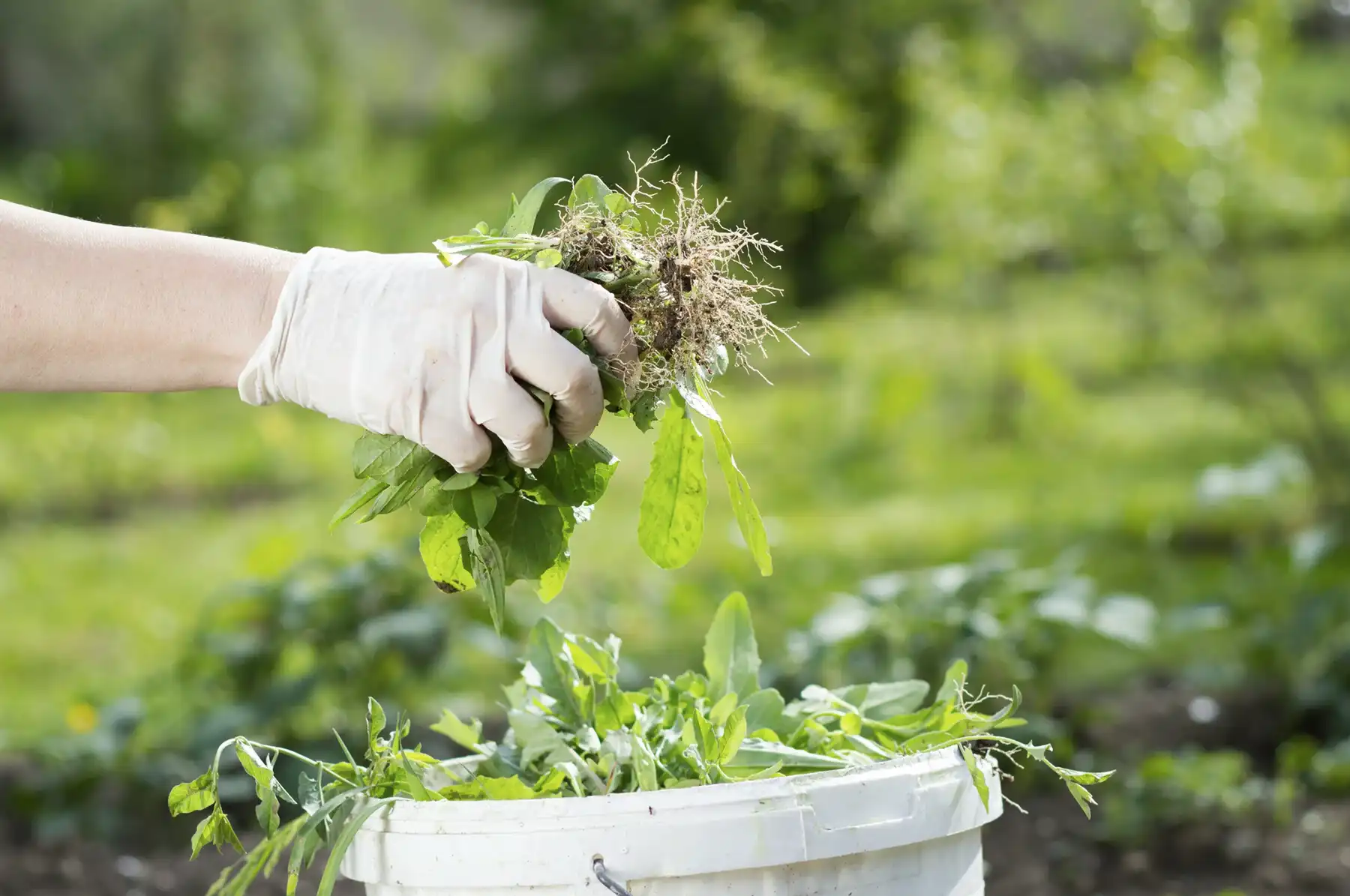
Hand Pulling
Though it may be time-consuming, manually pulling weeds by hand is still one of the most effective and eco-friendly methods. Be sure to remove the entire root system to prevent regrowth. Pull weeds after rain when the soil is moist for easier removal.
Smothering with Newspaper or Cardboard
Covering the soil with layers of newspaper or cardboard blocks sunlight, preventing weeds from sprouting. This method also improves soil health as the materials decompose and enrich the ground with organic matter.
Baking Soda
Baking soda is a natural desiccant that can help control weeds on driveways, sidewalks, and patios. Sprinkle it directly onto weeds to dry them out and prevent further growth.
Essential Oils
Certain essential oils, like clove and citrus oil, can be used as natural herbicides. Dilute them with water and spray them onto weeds for an eco-friendly alternative to chemical weed killers.
Flame Weeding
Flame weeders use a small propane torch to apply heat directly to weeds, causing them to wither and die. This method is especially useful for pathways and driveways, but it should be used with caution to avoid fire hazards.
Cover Crops
Planting cover crops like clover or rye can help suppress weeds by outcompeting them for resources. These plants also improve soil health by adding nutrients and organic matter.
Final Thoughts
Controlling weeds naturally requires persistence, but with the right methods, you can maintain a healthy and chemical-free garden. By using a combination of these eco-friendly techniques, you can keep weeds at bay while protecting your plants, the environment, and local wildlife. So, ditch the harsh chemicals and embrace a more natural approach to weed control!